From late February to May of 2020, the foundations of the Western developed world were shaken and weakened. Citizens of the United States and Europe seemed to respond first with denial, then shock, then with slow, chilling recognition that the routines and rules of daily life were disrupted or broken. The recognition of the new truth of our existence moved like a slow wave, and millions were stuck in denial while millions more were forced to stare into the maelstrom by economic and physical necessity. We thought that September 11, 2001, changed everything; it did for the minority directly hit by the physical destruction, the temporary market downturn, and the ensuing military response. But the COVID Wave is sweeping away much of what we assumed was fixed, stable.
Posts on this blog have covered some of my journeys outside of my home country. This one confronts the inward journey caused by the forced solitude required by a mandate to maintain “social distance”, to stay at home. I started limiting social contact in mid-March, and like many others began to explore the technology of web-based conferencing. Mingling with large numbers of people was dangerous; touching other humans was dangerous; journeys outside the home were limited to essential visits to grocery stores. Restaurants, churches, sporting events all closed. Political rallies were cancelled. People scrambled to purchase essential supplies, and in their panic, hoarded excessive amounts of paper products, disinfectants, and medical protection gear. The media was filled with stories about scarcity: of face masks and scrubs (“PPE”, personal protection equipment), of sanitizer, of ICU beds. Small riots erupted, led by those doubting the need to pause.
The drumbeat of grim statistics became the background noise on the media: virus-induced infections, hospitalizations, ventilators, deaths. Politicians loomed in front of cameras to give their daily briefings, which became monotonously repetitive: “millions of virus tests will be shipped next week;” “we’ve got to flatten the curve of hospitalizations;” “just fourteen more days and we can open this beautiful economy back up.” Photos and news clips showed empty spaces and long lines for testing and food banks. The president scurried to photo ops at medical laboratories and hospital ships. And the deadly stats kept climbing.
The frantic pace of a post-industrial, tech-savvy society just came to a dead stop. Millions of extraverted, FaceTiming Americans and Europeans and Asians stared at the walls and their screens and wondered about their food supply and childcare and income. People with stock investments lost a chunk of their wealth. Avid churchgoers wondered how they would continue the facade or the substance of their worship. Some forced to sit at home started online courses, picked up long-deferred reading, became reacquainted with their children’s idiosyncrasies.
For an introvert like me, the quiet alone time seemed a blessing wrapped in a fearful blanket of uncertainty. I would practice my Qi Gong; finish reading those four heavy volumes sitting near my bed; stream all those old movies for a second or third time. But I missed visiting my grandchildren. I took long walks, waving at the many neighbors trying to accomplish the same. I started preparing my gardens though the April chill precluded much vegetable planting; I researched the cold-tolerant early flowers. Pansies and poppies anyone? I am comfortable listening to an inner voice — just not all the time.
But many days were filled, not with an inward journey, but with preparations for increased hours of online tutoring and providing meals for the growing homeless population, and with online Zoom conferences with Quaker committees. Some fellow Quakers grappled with worshipping by teleconference, trying to muster a sense of the Spirit in the silence trembling across miles of fiber-optic cables. Can we summon the Holy Presence, the Shekinah, while staring at a computer screen?
By late April and early May, commentators endeavored to imagine a “reopened” world. Would we all go back to the same pursuits as in pre-COVID times? Would the sudden disappearance of noxious carbon and methane fumes be but a blip in our steady march toward habitat destruction? Leaders preached about “bringing back the good times.” Fights broke out in grocery and fast-food lines, as some lectured others about mask-wearing and social distancing. Rather than seeing a general unification against the insidious unseen enemy, old fault lines were reopened with mortal anger: “Believe the scientists” was opposed by “It’s a liberal hoax.” Those who turned to the old accounts of historic pandemics, from the fourteenth-century Black Death to the early twentieth-century Great Flu Epidemic, noted disturbing parallels: anger, riots, denial, and resurgence caused by premature return to social mingling, now called “opening up.” Camus’ The Plague noted officials’ repeated denials until the bodies in the streets belied them, followed by closing off the city walls.
As I write this in May, doubt and fear rein supreme. I tried to emerge from isolation at the end of April, after six weeks of isolation, by visiting my son and youngest granddaughter. Only to find out two days later that my daughter-in-law’s place of work, a nursing home, reported a new case of the coronavirus. So I retreated back into self-isolation, ordering more books and home supplies. We will not ever be “the same” as before. But we cannot imagine the new world. We wait for the scientists to save us with a vaccine or a cure. While some of us deny that this is really happening.
We see an ugly resurgence of nationalist anger against Asians, making the foreign “Other” a target of our fear since we cannot see the microbe that brings the pestilence into our lives. I doubt people will collectively “learn a lesson” from our myriad fatal errors in confronting the tiny beast; it is tough to maintain Spartan vigilance when times are easy. When the simple act of wearing a protective mask is seen as a sign of liberal politics, how will leaders convince taxpayers to pay millions for defending against the next pandemic? For there will be one.
After all the finely crafted plans for about ten days in Guatemala (see my previous post), nature took over and rendered a shorter and more challenging voyage. But then, this is the country that has confounded all travelers since a band of smelly, rugged Spanish soldiers marched into the land in the early sixteenth century, aided by bands of indigenous warriors recruited along the way from conquered Teotihuacan. The invading knights had another ally, the viruses they carried that felled far more Mayas than did their swords. I only visited a few of the planned sites, as tiny animalitos, little bugs, entered and frolicked in my core like a Mayan revenge. Then again, the conquering Spaniards, with their Church allies, kept establishing and moving their chosen capital as the earth shook their stone structures. They boldly named each chosen capital Santiago de los Caballeros de Guatemala, or the Knights of St. James, Guatemala chapter. I kept hoping for the animalitos to leave me alone, but persistent “eruptions” led me home early.
Parque Central de Antigua, facing Cafe Condesa
Following an on-time, smooth flight from Atlanta, I was met at the Guatemala City Airport and driven quickly (!) southwest of the capital to the older colonial town of Antigua. While the driver, Erwin, was courteous and responsible, he blithely accelerated up and down the sinuous road that mounts and descends the mountains that surround the capital, jogging my travel-weary stomach. But he brought me safely to the Casa Florencia, a pleasant and simple hotel in Antigua. Immediately setting out under the heavy wet skies of the rainy season, I walked the cobbled streets to the Parque Central and to buy a local phone. I had learned that morning, before boarding in Atlanta, that my daughter-in-law in Pennsylvania was about to give birth to her second daughter, a mere 20 months after their first. So I was eager to stay connected to home without spending too much on my domestic carrier’s international fees. So I settled into the Cafe Condesa to text my son for news.
Santiago Cathedral, Antigua
The layout of the Parque Central follows the design carried by the conquerers from most Spanish cities to the colonial towns of Central and South America: grand iglesia or catedral on one side, the government palace on another, and a baroque arcade along a third side filled with shops and cafes. You could say I had grown jaundiced about this ancient architecture, originally designed to impress the indigenous population and make the small band of conquerers comfortable in their strange surroundings. (Compare the Plaza Mayor in Salamanca Spain, and the Parque Central in Heredia, Costa Rica – both locations of great language schools I have attended.) But I enjoyed sitting in this Parque – or Plaza – sharing a bench with a young mother nursing her baby while watching her 3 or 4-year-old daughter feeding the pigeons. In the overcast mid-afternoon, scores of schoolchildren swirled and screamed around the central stone fountain.
Homage to Conquest, Ciudad Vieja
After a fine Pepian Soup at the Casa de Sopas (I recommend), I rested uneasily in my hotel room while listening to the powerful thunder echoing against the surrounding mountains throughout the night. After an early breakfast at Casa de Mixtas (also recommended), I walked to the bus park and climbed onto a colorful “chicken bus” for the short ride to Ciudad Vieja. (These chicken buses are garishly-repainted old school buses, many produced by Thomas Built Buses of North Carolina – a former banking client of mine.) Ciudad Vieja is the site of one of the earliest attempted capital cities for the conquerers; while the knights moved on, monuments to their conquest remain in the central plaza. I trembled before the rough stone carving that celebrates the submission of indigenous tribes to the proud conquistadors. It emanates a heavy brutality that is normally lightened by standard baroque arches. As I stared at a plaque carved into the side of the central church, which honors Jorge de Alvarado as founder of Ciudad Vieja in 1527, I imagined the resentment of the indigenous residents of these symbols of bloody oppression. These stone memorials poke a collective thumb in the eyes of all the sturdy inheritors of the jungled earth.
Iglesia de San Francisco, Antigua
Such thoughts persisted as I rode a chicken bus back to the stone-filled tourist attraction of Antigua. Though my thighs were already aching from the morning’s exploration, I hiked across the town to the Iglesia of San Francisco, drawn by the stories of Pedro Hermano, the patron saint of this town. A poor Franciscan priest, he established the first hospital for the poor and homeless of the city, and is buried within this Church of St. Francis. In spite of the history of priests aiding the conquerers, Brother Peter is a light in the darkness. But as I trudged back toward the central park, in a persistent tropical drizzle, I noted block after block of empty, dark piles of ancient stones that were the ghosts of the passing Spanish glory. Designated a UNESCO “World Heritage Site,” all of these sprawling ruins are protected from redevelopment. I wearily wondered at the price of honoring that bloody past: all that wasted space while indigenous families in worn handwoven cloth sleep on the uneven stone walkways of the colonial palace. Imagine a global initiative to convert these “historic” heaps of stone into affordable housing and workshops for artisans.
I will not share the name of the restaurant I tried my second night in Antigua, as the following morning I awoke with the unpleasant impact of “Mayan Revenge,” the aforementioned-animalitos. Although weakened and unable to eat, I adhered to my schedule and rode back to Guatemala City, to stay at the lodging Casa San Benito that was the first resting place for the Peg Partners group due to arrive the following day. Briefly greeted by the group leaders, David LaMotte and Sarah Robinson, I flopped on the hard cot in my tiny room. But, driven by hope and a manic adherence to original plan, I ventured out by taxi to the National Museum of Archaeology and Ethnology (Museo Nacional de Arqueología y Etnología). While there is a wide collection of carved stones from Mayan ruins, and artfully-accomplished exhibits of the ethnology of the original inhabitants, the Museum suffers from deferred maintenance and gloomy lighting. The ladino politicians and landlords are not inspired to donate funds to honor the conquered indios.
CEDEPCA volcano rescue
Weak and depleted, I rested in my small chamber for most of the following day, emerging in late afternoon to meet the nineteen-odd members of the Peg Partners group. The following morning, I mustered the energy to ride with the diverse group to its first introduction to Guatemala, at the offices of CEDEPCA, a Protestant-funded group (SEE https://www.cedepca.us/ ). Among its programs, CEDEPCA’s ministry to women through education, and disaster assistance, seem to have the most powerful impact. Framed in a Biblical context, the women’s education seeks to empower those caught in a culture of “machismo,” raising self-esteem and providing practical work skills. Most recently, this NGO has been providing ground-level disaster assistance to the victims of the eruption of Volcán Fuego, that buried whole families and villages. In addition to offering temporary shelter, CEDEPCA volunteers assist the emotional recovery of survivors. The keynote speaker to our group was a charismatic pastor, Hector Castaneda, who provided a sweeping view of Guatemalan history. Understanding of that history begins with the insight that the Spaniards came to Central America after fighting “Moors” for eight centuries, thereby, as Hector explained, developing “cruelty as a natural weapon.” Cruelty remains a core feature of governing; the conquerers came to grab wealth and return to buy glory at home, in the process raping the indigenous women as if they had no souls, and creating a class of ladinos to rule in their stead. American companies, backed by US military and intelligence, continued the economic rape of the country. It seems that the indigenous communities need emotional recovery from five centuries of oppression as well as from natural disasters. And the world wants to preserve the crumbling stone monuments to commemorate that history?
That NGO meeting was the end-point of my Guatemalan journey. My illness persisted, and the following morning I realized I could not continue with the group as they headed out to visit the schools supported by Peg Partners (see http://pegpartners.org/ ). No visit to the music school, no rustic tourist lodging by the shores of Lago de Atitlan. I was able to rebook my return flights to Atlanta and Asheville for the following day, after several hours of struggle. I was referred to a fine and gentle doctor a block from my Casa, who loaded me up with the appropriate meds to combat the bugs. I flew home in a daze, not dwelling on the missed opportunities but contemplating the lessons learned. Perhaps my visions of what could replace the crumbled ruins was all I was meant to see on this journey. My travel spirit guide knows better than I. And I look forward to meeting my latest granddaughter Lennox Rosemary. Maybe she and her sister can one day pursue that vision.
NOTE: I want to share some marvelous Spanish dichos, or sayings, that are written on the wall of that Antigua restaurant I will not name; the owner claims that they have been offered by various customers. Enjoy.
“Delibera con caútela, pero obra con decisión;
Cede con gracia, y aponte con firmeza.”
“El amor es como los cinco panes y los dos peces,
No comienza a multiplicarse hasta que tú lo ofrescas.”
To date, I have not blogged about a future trip. My plans to visit Guatemala in June, 2018, inspire me to share those plans.
In past decades, I have traveled for business and pleasure in Mexico and most of Latin America. I advanced my Spanish language ability while living in Ecuador with my young family. As a retiree, I sharpened the dulled language synapses in Costa Rica and Spain. I continue to use the Spanish language while I tutor immigrants in English in Asheville, NC. So I pray that I will be able to absorb the nuances of the Guatemalteca form of Spanish – flavored by the robust indigenous Amerindian dialects. Perhaps I will pick up a phrase or two of K’iche’, Q’eqchi’, or Kaqchikel.
I will be travelling with a group of nineteen North Americans, led by David LaMotte and Sarah Bryan of PEG Partners, Inc. PEG is the Spanish-language acronym for the Guatemalan School Project (Proyecto para las Escuelas Guatemaltecas). David and his wife Deanna founded PEG in 2004, and have built it slowly with small donations since then. The initial motive was to help rural villages build simple schoolhouses, since the central government was not providing funds for such structures. PEG has expanded to assist with books and with a music program. You can find more information at their website, PEG Partners.
When Guatemala is mentioned, many people in the U.S. and Europe think of Mayan ruins and violent rebellions. What they may not understand is the centuries of crushing oppression of the indigenous Amerindians, los indios, by the European and North American invaders. As in most of Mesoamerica and South America, a small elite of mestizo (or “ladino“) and European descendants control the welfare of the mass population of various Mayan and non-Mayan indigenous folk. European or Yankee owners relied on ladino overseers to manage the slave-like labor of indios on coffee and sugar plantations. The relation of indigenous indios with the ladino class has been rife with racism and cultural chauvinism for centuries, although in the twentieth century some campesino – peasant – movements, like CUC, have allied with poorer ladinos.
The Federal government of the USA has repeatedly intervened in the affairs of the people of Guatemala, often in partnership with corporations that have benefited from the slave-like worker conditions. Most infamous of the U.S. interventions was the overthrow of democratically-elected President Arbenz in 1954. As the schools supported by PEG are mostly in simple rural villages, they are populated by the indigenous people of the earth. They have quietly, persistently conserved their pre-Columbian view of the world, in a syncretic mixture of native and Christian practices.
I will fly to Guatemala City a few days before the group gathers there, and will proceed alone to the old colonial town of Antigua. Originally named Santiago de los Caballeros (St. James of the Knights), it was the first permanent seat of government for the Spanish colonial empire of Central America, covering what are now the nations of Costa Rica, Honduras, Nicaragua, El Salvador, Belize, the province of Chiapas (Mexico), as well as Guatemala. Soon after the founding of this capital, both the Franciscan and Jesuit orders established their schools and residences in the town. Repeated earthquakes over the centuries destroyed most of the original structures, and finally the capital was moved to the site of Guatemala City (GC). But earthquake-shattered ruins of ancient Spanish baroque facades remain, some reconstructed and partially-destroyed multiple times.
When the PEG group arrives, we will first gather at the Casa San Benito in GC, and will visit two organizations providing assistance in Guatemala, CEDEPCA and UPAVIM, with website links of cedepca and upavim. The latter organization centers on empowering women and is supported by the sale of fair-trade craft products. The former, supported by U.S. faith communities, sends missions to Guatemala for medical and dental assistance. Folks at CEDEPCA will help provide our group an introduction to the history and condition of the country.
We will next travel to El Tejar, a village where the music-centered school of CEDIN is based. CEDIN is the Spanish acronym for the Center for Holistic Education and Development, affiliated withChild Aid. The programs there are jointly supported by PEG and by LEAF International. According to the PEG website, “In 2012, LEAF International, which is a non-profit project of the Lake Eden Arts Festival in Asheville, North Carolina invited the older students from the school band to come to the United States to perform. Eight students, ages 11 to 18, and three adults (the two music teachers and the school principal) spent ten days in North Carolina, working as artists in residence at a middle school and performing at an elementary school in Asheville, then at Duke University in Durham.”
From El Tejar we will travel to Antigua, explore that town (again, for me), then to the village of Panajachel (“Pana”) on the shore of Lake Atitlan. After a hotel stay there, we travel by boat to Santiago, where we will stay La Posada de Santiago for two nights. During the intervening day, the group will travel to the village of Tzanchaj, home of the Escuelita David LaMotte. We expect to help with a work project while at the school, as well as to sing and read with the students. According to the PEG website, “Though the school is officially named after PEG founder David LaMotte, it is known locally as ‘Nino’s school.’ It is one of several schools that participate in a Traveling Book Box program, also supported by PEG, which operates from the Biblioteca Puerta Abierta (Open Door Library) in nearby Santiago, Atítlan. Teachers at this school and others in the area also recently benefited from another project supported by PEG, a teacher training seminar on classroom management and encouraging critical thought.”
I will return to GC, for the flight home, after the stay in Santiago. I hope to carry back visions and notes of the schoolchildren of rural Guatemala, to share on this site this summer. I fully expect that my travel spirit guide will find me on the road.
NOTE: following the original posting of this page, the Fuego Volcano in central Guatemala erupted with a destructive “pyroclastic” flow burying nearby village homes, with mounting deaths. Rescue and cleanup efforts are ongoing, and there is some risk of additional eruptions. Our group leaders still hope we can travel there, but with a modified itinerary and purpose. Perhaps we can be of assistance to those thousands affected. (Posted on June 5, 2018.)
The Fuego Volcano in eruption, seen from Los Lotes, Rodeo, in Escuintla about 35km south of Guatemala City. (Photo by Johan ORDONEZ / AFP)
How did this young American graduate student find himself leaning over the edge of a steaming volcanic crater with Indonesian friends? Did he truly sit in a Central Java village, struggling to fashion some mud bricks under the watchful eye of a village elder? Why did he find a trim Indonesian marine pointing a rifle at him on the wharves of Surabaya? Was that self truly an earlier version of this aging soul, or a whisper of his imagination? It is so long ago, decades, I can imagine this happened to someone else. Except the spirit guide I found there continues with me.
In the summer of 1967, I scraped together a small sum to voyage to Southeast Asia for the first time. I had completed one academic year of SE Asian studies at Yale Graduate School, and was anxious to bring the textbook and lecture data to life. It would bring me my first vision of the Luck of the Traveler. The airfare consumed a large portion of my funds, so I was at the mercy of local hospitality for most of my journey. Yes, children, this is way before AirBnb and smartphone apps.
The American War against Vietnam – the cause of my interest in Asian studies – was hot, but I managed to start my journey with a week’s stay in Saigon. I climbed on a classic Pan Am jumbo jet in San Francisco, and barely slept for the day’s travel across the Pacific. The bar in the upper First Class cabin was filled with hardened journalists until the lumbering aircraft began its circular and steep descent to Tan Son Nhut Airport. The unusual approach was intended to avoid antiaircraft fire from paddies just outside the city.
I stayed that week at the house rented by a friend from college, who was conducting “research”, as a civilian working for a defense-funded foundation. Early one morning in Saigon, I tried to accompany him on a private flight out to the Mekong Delta, but the Air America pilot would not take me on due to limits on total weight. I wandered the besieged city, and watched red rain of lead from gunships from our rooftop at night. My trip – and my life – almost ended abruptly when I discovered a large fragment of glass buried in a bowl of rice at a restaurant near the main drag of Tu Do (Independence) Street, now named Dông Khoï. Probably the peak moment of that week in Saigon, was an interview with a Buddhist monk about their protests of the war; I had walked to a temple compound of monks and managed to obtain an appointment with a follower of Thich Nhat Hanh, who had recently been banned from his home country for his peace activism.
I then flew on to Singapore, where I stayed a few days as a guest in a university dormitory. There I met another young American man, and together we hitchhiked across the causeway to the Malayan Peninsula, and caught rides – first on the back of an open-bed truck, then in a VW Beetle with a young Chinese couple – to the capital city of Kuala Lumpur, or “KL.” The Chinese couple spent a large part of the journey complaining about the Malaysian government’s policy of favoring the “bumiputra,” or native Malays, who tended to be less educated and had been treated with prejudice under the British colonialists. The ride gave me an up-close view of the smoldering racial divide, first engendered by the colonial divide-and-rule practice.
Following another few days’ stay in KL – sleeping on the floor of a university dorm room – I caught a public bus headed over the mountains to the less-developed east coast of the Malayan Peninsula. In the first stroke of travelers’ luck, on that bus trip I befriended three Americans serving with the U.S. Peace Corps in the federal state of Pahang. As we swayed and bounced on the precarious mountain highway, they invited me to stay with them in the town of Pekan, seat of the Sultan of the State of Pahang. When they learned I was a competitive tennis player, they set me up to play with the Sultan at one of his palaces. A very large man, the Sultan required that I hit the ball near to him, as he would (or could) not chase around the court. After about 45 minutes of awkward play, on a well-maintained clay court, we sat at a courtside table to enjoy some fresh pineapple juice.
Later that night my spirit guide abandoned me: after sharing a typical meal with my Peace Corps friends at a local restaurant, I was laid low with terrible intestinal distress. My friends aided me with a local concoction, a bitter white liquid, to slow down my system. It worked, slowly.
After a couple days’ rest, I shakily climbed a bus to Singapore to catch a flight to Jakarta, the main objective of my journey. An associate from Yale had referred me to some Indonesian students and journalists he knew, and I was pleased to see a group of them waiting for me at the old Halim airport that is now replaced by Soekarno-Hatta International Airport. I was thankful that they guided me through the sweltering crush of anxious Indonesians and expatriates, waiting at the arrivals gate outside of customs. That scene had not changed much when, two decades later, I experienced the same crowds when I arrived in early 1986 to work as a financial consultant.
I stayed at the Jakarta home of Gunawan, one of these young journalists – who would later become editor of a leading local magazine – who introduced me to the simple life without indoor plumbing in a typical middle-class house. On the first day of my visit, I joined my student friends at an anti-corruption, anti-Suharto rally in the streets of Jakarta, sweating in the large crowd and listening to the speeches from student leaders. General Suharto had recently taken over power from the independence leader and first President Sukarno, but the students and intellectuals in the streets saw that corruption continued. I was thrilled to visit, along with my new friends, the home of author Mochtar Lubis, whom I had studied a bit at Yale. Lubis served as kind of a godfather to this gathering of young intellectuals; in addition to publishing several novels, he was a leading anti-establishment journalist, and was imprisoned for years for exposing corruption in Sukarno’s government. He came from the Batak ethnic group, a predominantly Christian tribe in central Sumatra. (My Indonesian language teacher at Yale was also Batak.)
Then our group of students and aspiring journalists headed out on the road, hitchhiking toward the West Java town of Bogor and the slumbering volcanic peak called Gunung Gede (Big Mountain). My Indonesian friends – many of whom were of mixed Chinese descent, but using Indonesian names due to prevailing ethnic prejudice – explained that they were part of a solidarity club called Student Nature Lovers (Indonesian acronym: MAPALA). The group organized outings into the Javanese countryside in a self-cleansing effort to prepare for ongoing protests against political corruption. Arriving at the foot of Gunung Gede in late afternoon, our group headed up the well-trod trail for hours in the cool jungle night. Gunawan and his friend Soe Hok Gie explained that they wanted to avoid climbing in the stifling jungle heat of daytime. Towards eleven or midnight, we arrived at a large rustic lodge, mostly bare of furniture. After lighting a fire against the mountain chill, we quickly sorted ourselves around the wooden floor, whispering ourselves to sleep.
About thirty minutes before dawn, we gathered ourselves and headed back up the trail toward the crater. We arrived at the top in the gray dawn, looking down on billowing clouds and the steam rising from the deep, rocky crater. Big Mountain was dormant but alive. Our group, full of noisy chatter during the long night hike, remained reverently silent as we wandered the gravelly peak. Gie picked a small, dark-green leaf of a solitary bush, and explained that it was only found there and was believed to have salutary health benefits. It tasted bitter. There is not much to do on a volanic peak, except to meditate, gaze into the clouds, and be thankful for the trek. We silently descended to the teeming base. Two years later, I was saddened to learn that friend Gie had been overcome by the poisonous gas, and perished on the crest of a similar crater on Mt. Semeru. A much-loved young scholar, nature-lover, and political activist, Gie has been the subject of several memorial stones, books, and a movie based on his posthumously-published journal.
Sunset, Gunung Gede
While others returned to Jakarta, Gunawan and Gie accompanied me to Bandung, capital of West Java province, long considered the “Paris of Java” due to its cooler climate and pleasant setting among mountains dotted with tea plantations. My friends were particularly proud of the Bandung Technical Institute, calling it the “MIT of Indonesia.” The city gained international renown as the site of conference of unaligned Asian and African countries in 1955. Although the city is marked by clean, modern architecture, the image that remains with me is of a tall, destitute, and naked beggar who wandered across a busy intersection in midday, desperately trying to cover his private parts. The surrounding pedestrians turned away in shock, shame and pity; the Indonesian culture carries a puritanical strain that goes deeper than its Islamic veneer. While I saw countless unwashed and handicapped people on the streets of Southeast Asia, the total shame of that naked man is burned in my soul.
The main objective of my journey was Central and East Java, scene of wholesale massacres that followed a failed coup in September 1965, less than two years before my visit. The military leaders who prevailed against the coup forces blamed the local communist party for the attempt; the military then united with radical Islamists to exact revenge on their alleged enemies. I had been studying the incident – generally referred to as the Gestapu, an Indonesian acronym for the September 30 Movement – in the quiet halls of graduate school, and hoped to learn more on the ground. So, after Bandung, I boarded an old Dutch-made railcar (kereta api in Indonesian, literally “fire carriage”) headed east to Jogjakarta, enduring nearly 12 hours on a hard wooden bench. Scores of vendors boarded the train at each station stop, bearing snacks and trinkets in battered bamboo baskets. The grinding hours in a fire carriage were relieved by panoramas of rice-paddies, guarded by silhouettes of steep green mountains, and punctuated by startling depths of steep ravines that we crossed on ancient wooden trestles.
Perhaps thanks to the spirit guide, I met and chatted amid the train’s clamor with a Dutch priest who was serving as a missionary in a Javanese village. He was one of the few Westerners sweating and swaying in the third class car. He explained that, as a youth, he wanted to conduct missionary work in Asia; “since there was nothing like the Peace Corps in the Netherlands, I signed up for Catholic priesthood to get me there,” Pater (Father) Janssen explained. After some years working in China, he and his brethren were ejected after the Communist revolution there, and he landed in Java.
Old Dutch RR Station, Jogja
As I had no fixed reservation in Jogja – my sole objective was to view the Borobudur monument (partially pictured at the head of this blog post) before exploring East Java – Pater Janssen invited me to the hostel where he planned to stop overnight before the road trip to Widodaren, the village base of his mission work. Accepting, I enjoyed a pleasant evening and a hearty breakfast of nasi goreng, fried rice mixed with egg and onion and bean sprouts. The following day, I headed out early for Borobudur; in those days it was quiet around the massive shrine to the Lord Buddha, except for the usual scattered vendors of souvenirs. The scarcity of tourists may have been due to the recent waves of violence in the region. I slowly mounted the nine levels of stone platforms of diminishing size – in a pyramid-like structure – stopping on each platform to walk around the stupas (hollow stone monuments – see the photo heading this post) containing Buddha statues. Built in the eighth and ninth century, at the height of Indian influence in the region, the relief carvings on each level reflect a mix of native and Indian spiritual concepts. The vast man-made mountain is set on a hill, and as I climbed I gazed out at the surrounding Javanese plain, enjoying soft breezes and silence. The structure reflects the pattern of building “sacred mountains” that are found in South Asia and throughout Southeast Asia, most famously at the partly-destroyed Angkor Wat of Cambodia. The Borobudur complex has been restored several times, and is listed as a UNESCO World Heritage Site.
Pater Janssen continued his generosity to this young graduate student by inviting me to visit the village of Widodaren with him. The sprawling village lay just over the provincial border in East Java, near the Solo River and the town of Madiun. On the four-hour jeep drive to the village, the priest explained a bit about the politics of Catholic missions; while his main objective was to build a new school and clinic in the village, in order to get the funds from the Church, he had to build a church. All were in process as we spoke. When I explained my interest in local recollections of the mass violence in 1965, Janssen cautioned me: “You will find that most villagers are ashamed of the outburst and reluctant to speak about it with anyone. Be careful.”
The elderly Javanese man introduced as the village head (kepala desa, or kepala kampung) was gracious, and invited me to stay in a small house near his own. In my week’s stay, this village elder led me around the many sections of Widodaren and explained the rhythms of its rice-centered agricultural life. Javanese is a complex dialect, and the many ethnic groups are linked by the national Bahasa Indonesia, a simplified Malay-related tongue first adopted by the coastal tradesmen and later promoted for national unity. So in speaking in the Bahasa, an official state dialect, I was missing the deeper innuendoes of the indigenous language of Java. My guide also glossed over the differences among the several sociological, and religious, classes coexisting in all Javanese villages, that I had learned in my graduate studies. When I asked about these, the “pak”, an honorific term for elder males (from “bapak”, papa), emphasized the unity of the entire community, or rukun kampung. This reflects the centuries of efforts to balance the mixture of native Javanese culture with Hindu, Buddhist, Islamic, and European imports; varying adherence to the different beliefs has exacerbated the evolving social conflicts.
Of all the local industries and crafts that Pak proudly showed me, at this distance in time I recall most clearly the brickmaker. Seated in the workyard next to his house, the lean and taut craftsman fashioned the bricks in the old way, packing a four-square wooden frame with thick mud and slowly lifting the mold, allowing the earthen squares to dry in the tropical sun, then repeating over and over. Smiling, the village head and the brickmaker invited me to try imitating the craft. After several failed tries, in which the mud collapsed in a puddle when I struggled to lift the heavy mold, I finally managed to create four fine-edged blocks. I smiled with pride when the patient craftsman pronounced “baik sekali,” or very good, in a guttural voice. I sat next to the master in the hot sun, focussed only on that reddish-gray mass of Javanese earth.
One evening, late in the week, sitting by a fire in the headman’s compound, with a few other elders, I tried to ask about their experience of the social upheaval of September 1965. With great embarrassment over the breakdown of social order, Pak quietly explained that the failed political coup, and the army’s revenge afterward, had sparked a wave of revenge killings, a settling of scores among different religious and social factions, partly led by “fanatic muslims” against the more traditional Javanese. The memories of the countless headless bodies choking the nearby river still burned brightly among the survivors, but shame and fear suppressed open discussion except in the darkness of a village head’s home, with an outsider. Feeling their pain and shame, I stopped asking questions.
Then I was off on a three-hour bus journey to Surabaya, a busy port city on the north coast. Ports along the north coast of Java served as entry points for the dissemination of all the varying cultural and religious beliefs carried by traders and holy men on sailing vessels from South Asia and the Middle East. After the port of Jakarta, Surabaya is the largest and most-developed on Java. My brief stay in the city was marked by two very different events. First, at a restaurant I was introduced to an Indonesian army general who lived in the area; when he learned that I had played tennis for my college team, he invited me to play at his club. The club was a luxurious refuge from the hot, dirty city, with well-maintained grass courts. I had never played on grass courts, only paved and clay. I was surprised how fast the balls skidded on the grass surface, and my timing was poor. Though I was sorry not to be more competitive, the general seemed to enjoy the outing and we shared drinks at the club afterwards. So I had experienced two very different moments of “tennis diplomacy” on this journey.
At the time (late-July 1967), urban race-related riots were raging in U.S. cities, most notably Detroit. Sitting in a comfortable club in Indonesia, I was bewildered by the extent of the fires and violence back home. Although the general and his friends peppered me with questions about it, I had no informed answers. I was stunned that I knew more about the history of violence in rural Java than about the causes of American urban unrest. Scores of people died, hundreds of structures were burned down. The emotional impact caused me to rethink my career direction, and I later devoted years of volunteer action in U.S. “inner cities.” I still am not certain I understand the origins of America’s mid-century riots any more than I understood the causes of revenge killings in Java. However, the 1982 Australian film, The Yearof Living Dangerously, uncannily communicates the feeling of communal tension during the 1965 uprising.
The last afternoon in Surabaya, I wandered down to see the great harbor. When I was a child, I loved to accompany my Dad to see the fishing harbor in Gloucester, Mass., where the white gulls swirled and cried around the seaworn fishing vessels as they unloaded their catch. He had served in the Navy, and continued to be fascinated by the sea. So I felt free and comfortable to wander onto some of the large wooden wharves in that Javanese harbor. Among the rusty freighters, I noted a couple of gray naval vessels bristling with cannons and antennae. While gazing seaward, I heard a shout behind me, on the wharf. I turned to see a uniformed Indonesian guard pointing his rifle toward me; he yelled at me in Indonesian: “Not allowed. Get out.” Stunned, I must have stood still for some minutes, and the soldier continued yelling at me and aiming his gun. Trying to remain calm, I raised my hands and walked slowly off the dock. My back felt the barrel of his gun pointed at me, and I awaited the rifle report and the blow to my back. It never came; I just kept walking, amazed and thankful that he did not pursue me. I later learned that the Soviets, who provided military assistance to the Indonesian government, were using the harbor for some of their Indian Ocean fleet. The Cold War extended to these islands.
The next day, I took an overnight train back to Jakarta, and soon after I boarded a flight toward home. I would return to Indonesia nearly 20 years later, to work as a financial consultant, with my family life in shambles. That is a story for another time.
My name is Roland Rand. I am the clerk of the Tallinn Meeting Group in Estonia. Quaker Friends visiting Tallinn from the USA have suggested that I write about my journey of faith. So I will introduce you to my experiences that led me to practice and promote Quaker faith and testimonies.
When I was born in Estonia, in 1966, the country had been occupied by the Soviet Union since defeating Nazi Germany. I entered a life of music at age five, playing the piano, and continued musical studies in piano, composition, and conducting at the Higher Music School in Tallinn. I was raised by my mother and a spiritual grandmother who attended church on Sundays, often taking me along. The Soviet state was atheistic and people attending church were suspect. On several occasions, Soviet agents followed us on the way to church. As a consequence, on one occasion my mother was reprimanded at work and her children were denied permission to go to summer camp.
Tallinn Old Town and Port
When I continued to worship, I was apprehended by the occupying authorities and sent to work in a rubber factory a total of 100 hours during weekends. Some religious families were punished more severely, by taking away their children and placing them in children’s homes, with the aim of making Soviet citizens of the children.
In 1985, at the time of Gorbachev’s glasnost, I joined a freedom movement while I was still in high school. Despite discrimination against people who practiced religion, I continued to attend church and conduct a choir. Freedom was expressed by prayer meetings held in the church office. Risking capture by the KGB, I also helped Lutheran pastor Jaan Kiivit to smuggle bibles from Finland, by hiding them in sacks of flour.
Although Moscow recruited young men from the Baltic States to clean up the site of the nuclear accident in Chernobyl, I managed not to have to serve in the Red Army by working as an organist with the Tallinn Philharmonic band Nemo. The state agency Gosconcert organized our band’s concert tours in the Soviet Union and abroad. Whenever we toured in the West, our passports and money were taken from us so that we could not escape. We were not paid in cash, only housed and fed in Spartan conditions. In 1987, our band was sent to the island of Mauritius to mark the October Revolution, although the Soviet music repertoire evinced little local enthusiasm.
By touring with the band outside the Soviet Union, I gradually realized how bad our home conditions were. After agonizing inner debate, I decided in Mauritius that I would defect to the West. We had been warned not to have any contact with local people and even to go walking in town required a special permit, seldom by the director and never to young people like me.
Mauritius
With the help of a local person, I managed to sneak out to the US embassy and ask for political asylum. U.S. Ambassador Ronald Palmer personally assisted me, and the whole embassy staff was very helpful. When the Soviet embassy discovered where I was, it asked to meet with me, allegedly to determine whether I had done this of my own free will or had I been “forced” by the US authorities. The meeting took place in a Mauritius government building, as a neutral site, with guards provided by the US embassy and the government of Mauritius. Ambassador Palmer came with me and several officials and an interpreter came on the Soviet side.
The Soviet representatives asked several questions, but basically wanted to know whether I had gone freely or was forced to go to the US Embassy. I answered consistently that I had come by myself, and requested asylum myself. They warned me that my defection would cause serious problems for my mother and brother living in Tallinn and that I would lose my USSR citizenship. I was likewise warned that I would have serious difficulties ahead, such as being run down by a car or left destitute on the street. Despite all that, I did not change my mind, and arrived in the United States on November 12, 1987. I have good memories of the kindness shown by the people at the American embassy.
Roland at Estonia House, 1990
The US Catholic Conference of Migration and Refugee Services provided housing and clothes, and I initially worked in the Conference office as an assistant. I soon met other Estonians in New York, and found a job as a janitor at the Estonia House. There I met an Estonian family that “adopted” me to live in their home in Westchester County. A member of the family was a nurse at a local hospital and found me a job there as an orderly. I faithfully studied English at a local school where I occasionally gave music performances. I was honored to attend the world Estonian music festival, ESTO, in Melbourne, Australia in 1988, and was invited to perform there with a band led by Urmas Karner.
After returning from Australia, I began working as an assistant organist at the Estonian Lutheran Church in New York City while also studying music production. That led me to found a music production company, while working at night as a doorman for subsistence. In my free time I participated in Estonia’s freedom movement by attending public meetings in Central Park, and near the United Nations building, during Captive Nations Week in 1990. Estonia regained its independence in 1991 as the Soviet Union was collapsing. I had brief contact with Quakers in New York during that time, but did not consider myself ready to join them.
The Estonian Film Institute invited me to Estonia in 1997 to help with the modernization of its film studio. That year, I met my wife Merle who was a literature student at Tallinn University. I began to feel safe there, as the last units of the Red Army pulled out of Estonia on August 31, 1994. After considering a return to work in New York, I chose to remain in Tallinn and, in 1998, to marry Merle. While working at various studios as a sound engineer, I taught Sunday-School at a church where I served as an assistant choral conductor. We were very happy to live in independent Estonia and raise a family. Now we have three wonderful children: Rafael is 18 years old, Raimond is 10, and Laura is eight.
I developed a deeper interest in theology and as a result, I studied at the Institute of Theology (Estonian Evangelical Lutheran) during 2008 to 2011, and was offered minister positions. However, I did not feel comfortable with the church institutions. Due to my growing interest in ecumenical outreach, in 2009 I founded an NGO called Diverse Faiths Alliance. Although Estonian churches have not historically been open to the ecumenical spirit, I believe that in a fast developing multicultural society, peaceful coexistence of different religions becomes increasingly important. The DFA promotes peaceful resolution of the continued Estonian anger against Russians.
Through my work on the Diverse Faiths Alliance, in 2010 I met Myra and Steve Ford, practicing Quakers from England. They both taught English in a private language school and at the Tallinn prison. She persuaded me to screen an inspirational film about civic courage in a Palestinian West Bank village, with a personal introduction by Mr. Nabil Al-Wazir, the Palestine Liberation Organization’s representative in Finland and the Baltic States.
Merle and I joined the Quaker worship organized by Myra and Steve; Myra served as the clerk of the Tallinn Worship Group. After she and Steve moved to the UK in 2012, Bob Gilchrist, a diplomat at the US Embassy, became clerk, offering his apartment as the Meeting’s venue. I assumed the role of Meeting clerk after Bob was transferred from Estonia in 2014.
2012 World Friends Conference, Nakuru, Kenya
During the years of its existence the Tallinn group has been very active in peace and social justice movements. Currently we have 12 regular attenders for our monthly worship meetings. We seek and welcome visitors, discuss Quakerism and meditate together. Based on our worship group’s connection with the Europe/Middle East section (EMES) of Friends World Committee for Consultation, I was fortunate to attend a World Gathering of Friends in Kenya in April 2012.
The Estonian Quakers most ambitious undertaking, to date, has been the 2014 peace initiative in Kiev and Odessa, Ukraine within the framework of “A Peace Dialogue in Eastern Europe.” I organized this effort with funding from EMES, spurred by the suffering caused by Russian military incursions. There we led Alternatives to Violence training and a roundtable about cultural diversity with the aim of advancing peace in the region and creating a better understanding about the countries in Eastern Europe.
Peace Dialogue with Odessa Friends
Starting in 2010, the Tallinn Worship Group has organized annual events marking the Day of Peace, with activities such as “One Minute of Peace”, collaborating with the Estonian Women’ Studies and Resource Centre (ENUT). More recently, the Day’s events have consisted of outreach to refugees at the government-sponsored Vao Refugee Center. The latter is a small shelter for immigrants from Muslim countries and from Ukraine, with a population varying between 80 and 100. The refugees generally stay for about 6 months while arranging permits to work in larger European countries.
Tallinn Friends at Vao Refugee Center
The Tallinn Worship Group has limited resources but some ambitious goals, including:
Registration as an NGO in accordance with government regulations;
Translation of core Quaker writings into Estonian, with subsequent publication and distribution;
Interfaith leadership of Alternatives to Violence training in Estonian prisons;
Establishment of a permanent Estonian Quaker Center.
Based on some recent contributions, international and local, we have begun translating some modern treatises explaining Quaker faith and practice. We have been blessed by the recent interest and assistance from European and American Quaker organizations and individuals who have taken an interest in our interfaith peace work. If you would like to know more about our Group, please contact me or my American friend Adolph Hoehling.
In the Light,
Roland Anton Rand, roland.rand@mail.ee
U.S. Contact: Adolph (Dolph) Hoehling, dhoehg@gmail.com
Tallinn to Stockholm FerryLidingo, Stockholm archipelago
Saturday 27 May began and ended with farewells; first, at 4 AM, a hurried goodby to niece Jenn as she headed for the Tallinn and Riga airports to land in Amsterdam later that morning; then, restful tea and cake with Roland, Merle, and family in their apartment before boarding the overnight ferry to Stockholm. Finally, I am on the water, slowly easing out of Tallinn harbor, watching the Old Town towers shrink in the evening light. After a lush feast of seafood and walks on the deck to admire the long Baltic sunset, I retired to my private berth. Unfortunately, a nearby gang of Swedes kept up a drunken revelry most of the night, and my bunk bed was narrow and hard. But, after a brief sleep, I enjoyed the slow entry into Stockholm’s harbor in the clear Sunday morning air, winding through the archipelago of lush islands with sumptuous homes along the shore.
Stockholm Meetinghouse
I had communicated by email with a member of the Stockholm Friends’ Meeting, and was invited to attend their usual 11AM Meeting for Worship. Disembarking at the ferry terminal about 10AM, I made a snap decision to take the first and only taxi ride on this entire three-week journey. This meant a dash on highways and city streets from the north of Stockholm, over some bridges, to an upscale island suburb just south of the town center; the taxi driver wondered, “Do you know this is in the expensive area of Sodermalm?” But after repeated checking of his cellphone GPS and a bit of wandering in narrow streets, he pulled up to an 18th-century mansion. I was greeted warmly in the foyer and, after gratefully removing my heavy boots and depositing my luggage, was ushered into the large worship room. Perhaps 12-15 worshipers were seated in straight-backed chairs, facing each other. I settled into the familiar reverent silence, broken in the next hour only by a couple of spoken ministries. Following the worship, I joined six or so Friends in a garden courtyard over a simple soup offered for donations to a homeless service. We enjoyed relaxed, wide-ranging discussions of immigration, Swedish politics, motivations for social activism. My Swedish Friends were agreed that a recent election had pushed back pressure from the extreme right. On the other hand, admitted a slender, poised lady to my left, “the myth of our welfare state cannot hide the poverty and homelessness that exists on these streets.” A well-spoken older lady from Uppsala, an old university town about an hour’s commute north of Stockholm, was familiar with some of my favorite American Quaker writers and maintains the Stockholm Friends’ large library.
As with most of my Quaker acquaintances in the USA, this gathering appears composed of well-educated, professional whites. We make a business of “helping” the less fortunate.
A Friend, walking his bicycle, led me to the Tunel-bana station to catch a subway that would connect me to the correct “T” to Enskede, a southern suburb that held my next hotel. After descending the Svedmyra station, I and my sore feet were delighted to see that my hotel – Maude’s – was a short walk on a leafy quiet street. After a busy week of wandering in Estonia, and a noisy overnight ferry ride, I felt blessed to land in a peaceful haven. But after checking in, my first order of business was to search for sandals to replace my boots. Fortunately, a couple stops back on the same T brought me to a shopping mall and a shoe store. With great relief I found some comfortable strap-on sandals, just before the store closed at 5PM. Liberated from most pain, I ventured two T-stops north, to Skanstull, and found a lively Sunday-evening crowd on a boulevard full of cafes. I settled into a pizza-kebab place to watch suburban youth parading by, celebrating the unusually warm temperatures.
Royal Dramatic Theater
Monday, May 29, my last full day in Stockholm, began with a leisurely breakfast at Maude’s Hotel. Riding the now-familiar train into central Stockholm, I decided to first review the city landscape from tour bus and boat. The tour boat circles many of the fourteen islands that comprise the city, including Gamla Stan, the old royal palace center that I had toured on my first visit a couple weeks before. After exploring the smaller islands of Skeppsholmen and Kastellholmen, formerly dominated by a naval defense base but now turned over to museums, I chose to focus on the dramatic-looking Nordic Museum (Nordiska Museet). This is the Gothic-style building that fascinated me before, next to the Vasa Museum that I had spurned, much to the dismay of my hip-challenged AirBnb host.
Nordic and Vasa Museums
The Nordic Museum displays what anthropologists call the “material culture” of Sweden, past and contemporary. The featured exhibit during my visit was about the impact of light – or the lack thereof – on Nordic peoples, due to their existence at 60 degrees latitude north or above. They endure the long winters with no more than six hours of sunlight in the brief days, and up to eighteen hours of daylight during June through August. This cycle helps explain the manic exuberance I have seen as the long winter gave way to more light and the end of May. The collection of traditional light sources – wood fires, candles, paraffin lamps – emphasizes that Swedes and Finns and Norwegians would ration these sources in the winter, so that people operated in murky dimness in their homes. Did that lead to some darkness of human spirits? Is that why thriller novels like those of Henning Mankel are so dark?
I was also thrilled to review the Museum’s extensive materials on the Sami, or indigenous people of extreme northern Scandinavia and Russia, previously called Laplanders. The message of the exhibit is twofold: 1) to represent the richness and ingenuity of their artifacts and clothing, fashioned by hand to survive the rugged world of hunting, gathering, fishing, and reindeer farming in the Arctic zone, and 2) to recount the awakening of Scandinavian people to their traditional prejudice against the Sami, who are similar to the Inuit of the American and Asian continents. Swedes especially repent the past existence of an academic institute, in Uppsala, dedicated to the study of the Sami as if they were of a different, inferior species. My thoughts quickly ranged to the Anglo-European treatment of Native Americans, past and present. The Nordic Museum has a small, separate exhibit on baptismal blankets and robes going back to medieval churches; the commentary notes that the infants were considered “heathen,” or not quite human, until they were “saved” by the dousing ritual. There is an unintended, implicit connection of the two exhibits: were the heathen Sami also considered less than human?
Emerging from this ethnographic museum in the bright late afternoon, I walked back through the business district of Stockholm as office workers raced to the tram stops or settled into outdoor cafes to mingle sunlight and wine. Before riding south to my own retreat, I once more glimpsed the gleaming white tower of the Royal National Theater, where such great actors as Ingrid Bergman and Max von Sydow developed their art. After a quiet evening in the suburban hotel, I returned to the train station to board the fast train back to Copenhagen. On a cloudy and rainy day, the train seemed to hurtle much more rapidly southwest than I recalled its motion a couple weeks prior.
Amager Strand & Oresund Bridge
This time, I got off the train at the CPH airport – near the western end of the long Oresund Bridge from Malmo, Sweden – to take a brief metro ride to the area of Amager Strand, a southern suburb of Copenhagen, to find my last hotel stop before the flight home. The hotel felt industrial, cold, and confined, so I was driven quickly back out to walk near the beach and enjoy a neighborhood restaurant, the Cafe Phenix – Amager. Enjoying the sharp sea breeze, I alternately stared at the long line of towering wind generators and the great bridge that carried my train to and from Sweden. In my brief last stay in this bedroom community of Copenhagen, I returned again and again to the Strand.
view east from amager
On my last full day of this ScanEst trip, I chose to focus on the great SMK, Statens Museum for Kunst or National Gallery of Art, on the edge of the Botanic and Kings Gardens. Following a crowded ride on the metro from the Oresund Station to the Norreport Station, I hiked again through the vast grounds. I had walked these grounds over two weeks before, found the SMK closed, and vowed to return when it was open. On a gray and misty Wednesday, 31 May, I strolled again past the Rosenborg Castle that dominates the Kings Garden (and pictured in an earlier post), and sat on a bench to watch the many birds in the marshes and ponds of the Botanic Gardens, before approaching the high wide stone steps of the SMK.
Although weary from days of walking through northern Europe, the rich and immense collections at the SMK kept me moving from room to room for hours. The premier exhibit was entitled “Nordic Highlights,” an echo of the exhibit on light at Sweden’s Nordic Museum, covering works of Danish and other Scandinavian masters from 1750 to 19o0. The chronological arrangement of these works demonstrated the changes in style and culture, evolving from focus on elegant portraits of aristocrats to representation of harsh country life. There is also a selection of European Art from 1300 to 1800, and a surprising display of French “modern” art of 1900 to 1930, including works of Matisse, Braque, Modigiani. My favorites, though, are examples of Nordic social realism in the mid-to-late nineteenth-century works of Munch, Block, Ancher, and Henningsen. I was delighted to learn that photographs were allowed, without use of flash.
In a Roman Osteria, Carl Bloch, 1866Lifeboat, Michael Ancher, 1883
I
Summer Evening, Edvard Munch, 1889Evicted Tenants, Erik Henningsen, 1892
After riding the rails back to my odd industrial hotel, I spent a quiet final evening in Copenhagen, washing and organizing clothes, then walking again on the Amager Strand and dining at my favorite Cafe Phenix. My journal says: “Tired and I wanna go home. Rest my feet. Feed my cat.”
Thursday June 1st extended by six hours for me, as I flew west with the sun for eight hours to Dulles, then grabbed one more gift from the Travel Spirit as I was able to catch an evening flight back to Greenville airport, find my car and blearily drive home at about 3 AM on my body clock. It has taken me nearly a month to recollect the journey and set it down here. I am reminded of one more image from Haapsalu, Estonia, looking out at the Baltic.
The day after enjoying the journey outside of Tallinn, to Haapsalu, on Tuesday 23 May I chose to concentrate on a visit to the Occupations Museum, a modern glass and concrete building a few blocks from my loft in P. Suda. Bypassing so many reconstructed monuments to the feudal past, I was drawn to this demonstration of the present-day view of Estonian history. Crossing Kaarli Avenue in the shadow of St. Charles’ Church, I approached the contemporary wall of glass on the corner of Toompea Street. I looked up the hill, also named Toompea, and saw the onion-domed Nevsky Cathedral pressing against the blue Baltic sky. It seemed that the Museum was sticking its thumb in the monument to the oppressive past; or is that the Cathedral’s thumb – or finger – gestured at the clear-eyed exposure of the history of occupations? Not too distant from both, the square steeple of St. Nicholas’ Church dominates Old Town; build by Gotland Germans in the thirteenth century, St. Nicholas’ was reconstructed after Soviet bombing during WWII.
The museum’s name refers in the plural to occupations, as its exhibits cover the period of 1939 – 1991, from the Molotov-Ribbentrop Pact until the restoration of Estonian independence in August 1991. Although the Soviets annexed Estonia – and other Baltic states as well as portions of Poland, Finland, and Romania – soon after the Pact, the Nazi armies violated the Pact by occupying Estonia in 1941, after having invaded Poland. Nazi occupation – with all the forced labor and ethnic cleansing that entailed – ended with the Soviets marching back into Estonia in 1944. Although the Soviets, under Lenin, had originally granted the Republic of Estonia its independence in 1918, upon its re-occupation in 1939, Moscow chose to re-establish a Socialist Republic (read: colony) until 1991.
The Museum’s exhibits are stark and factual, accompanied by a series of documentary films on monitors above each themed station. The exhibits emphasize harsh living conditions for Estonians, including slave labor, deportation to Nazi or Soviet camps, and evident genocide of tens of thousands of those deported. One of the most striking images at the Museum entrance are a host of suitcases made of concrete, with metal handles, that speak of the forced deportation – and disappearance – of Estonian residents. The mood, lighting and stark artifacts are reminiscent of the Holocaust Museums around the world that receive more attention. On the main floor, one can listen to oral histories of survivors while gazing at simple artifacts and occupier uniforms that demonstrate the dismal life under occupation. On a lower level, within bare concrete walls, the Museum hosts an exhibition of photos about migrants from Africa and the Middle East to Europe. Now a member of the European Union, Estonia is being pressured by its wealthier neighbors to accept more of these recent refugees.
Dazed after a couple hours of that fare, I wandered into the sunlight and through Old Town. I toured the old craftsmen alleys, where the medieval guild artisans labored over a wide variety of products, including weaving, ceramics, leather goods and woodwork. I had a vague hope of sensing the distant presence of my great-great-grandfather, a cabinet-maker who carried his craft to the New World. It is tough to visualize the nineteenth-century past that is obscured by the omnipresent emphasis on tourism. The streets are filled with inns and restaurants, interspersed with old religious and municipal buildings. So much of the town has been rebuilt, it feels like a Disney facsimile park entitled “Ancient Medieval Town,” with round towers and square steeples and humble monasteries, oh my.
And yet, and yet: an image rose in my mind, of a young man in simple clothes and a small bag, nervously leaving his home and work, and boarding a wooden sailing craft in the evening, heading out on the Baltic and into the unknown. At great risk, he left friends and family; why did he leave, and what did he expect to find? It was a ghostly feeling, but one I trusted. I see him walking through the narrow cobbled streets, footsteps echoing on the dim heavy walls, briefly glancing behind. There in the bright mid-day light, I shivered with him.
Then it was Wednesday, midway through my Estonian journey, and I was expecting the arrival by afternoon ferry of my niece who has been studying early childhood education in the Netherlands. Friend and voluntary guide Roland planned to join me in greeting her, then with his wife join Jenn and I for supper in Old Town. But first, after dropping off a bag of laundry at a service near my house, I chose to board the infamous Red tourist bus that plies its way around town and its outskirts. This was a bit of surrender, following the classic tourist behavior, but I was rewarded by an informative overview of the town and outlying areas. In fact, the bus does not enter Old Town, but provides a well-narrated sense of the breadth and dynamism of the entire city, including the expanding zones of factories, high-rise apartments, and gleaming offices. But it also reveals the growing pains: blocks of both drab soviet-era residences mixed with older grand homes that have descended into shabby disrepair while locked in litigation limbo over privatization. From the rambling double-decker bus I glimpsed the edge of a district called Kadriorg, where the Russian Emperor Peter celebrated his conquest by laying out a vast park and palace in honor of his wife Katerina.
interior, Nevski Cathedral
Hobbled by a couple of toe blisters produced by too-new and stiff hiking boots, combined with miles of daily walking, I hopped off the Red Bus in the port area in search of some softer slip-on shoes. Once-acquired, I rode the bus to the Toompea area, the hill that is crowned by the Russian Nevsky cathedral and by the Dome Church of St. Mary, and surrounded by a large green area. A glimpse of the Nevsky towers is seen in the photo heading this blog. I mounted the steep stone steps, past a babushka-style lady begging for alms, into the darkened, gold-clad interior. A large section in the rear is devoted to the sales of mass-produced religious icons. Interior photos are prohibited; I surreptitiously snapped a couple on one side of the chapel, where scaffolding and workmen revealed the ongoing maintenance of this century-old symbol of past Russian dominance and of the weight of the Church behind the fist of imperial power. The gold cladding on the altars was enabled by the marching of soldiers’ boots.
I walked to the offices of Tallinn’s premier private language school, and interviewed its director. I had mentioned in passing to Roland my random thought of teaching English in Estonia, and he set up this meeting. A kind, meticulous, and well-spoken lady, the director invited me to give a brief teaching demonstration the next day, something required of all the institute’s teachers. I was tempted, but declined; my work is nearer home, where I teach English to Latino immigrants. I then met Roland and rode the tram to Terminal D to meet niece Jenn. We had not seen each other in a few years, though I kept up with her teaching career through my sister.
At Balthasar’s, Old Town
After settling her in an apartment next to mine at P. Suda – its availability an accident or work of the spirit? – we met Roland and his wife Merle at the sumptuous Restoran Balthasar in Old Town. This was perhaps the most elaborate meal I had on my entire ScanEst journey, and we enjoyed exchanging views on education and child development. Merle, in addition to mothering three fine children, is a published writer, a part-time teacher, and a caretaker for a ninety-five year old defector from the Nazi army. She gave me a copy of her beautiful book entitled “Kingitused,” or Gifts. Many of the photo illustrations were provided by her older son, Rafael. I believe she and Roland are dedicated to offering gifts to friends and strangers.
Palace and Visitor, Kadriorg
On Thursday, 25 May, Jenn and I directed out attention to the immense Czar palace and the art museum complex in the parks of Kadriorg. We spent most of our time at the Kumu Art Museum, the largest and most impressive of Estonia’s many art museums. It houses the best representation of Estonian art from the 18th century to the 1990’s, and the works provide a visual history of changes in artistic sensibility over those centuries, from realistic representation of the traditional countryside to impressionistic and modernist works influenced by the major schools in Western Europe. My niece was able to spend more hours there than I, as my raw, blistered toes drove me to retreat to the apartment for a couple of hours.
Meeting her at Vabaduse Valjak – Freedom Square – in late afternoon, we wandered Old Town in search of a restaurant, wanting to avoid the most blatantly touristic. We at last settled on an unusual place on the border of Old Town and the modern dynamic city, called Manna La Roosa. The interior decoration, the eclectic clientele and menu all give this place a Bohemian feel. We felt quite content with our choice as we strolled home to P. Suda in the mid-evening twilight.
Two locations highlighted our last full day, Friday, in Tallinn. First, I accompanied Roland and Jenn to her appointment to speak with teachers at a private pre-school. Jenn quickly settled into an extensive sharing of views on early-childhood development in one of the classrooms, one teacher providing the necessary translations. Meanwhile, as the irritation in my molar and gum had worsened, dear Roland took me to the top clinic in Tallinn, and talked his way into a nonexistent appointment space with one of the most talented dentists in the country. As we were waiting outside the dentist’s office, Roland commented: “We’re really lucky; it’s Friday and she is headed off to vacation after this.” I looked at him, smiled, and said: “Luck? I don’t think so, Roland. Trust the Spirit.” He gave me a bemused look.
St. Nicholas, Tallinn
Then, reunited with Jenn and my gum infection tamed, Roland talks his way into the museum and concert hall within St. Nicholas’ Church, although the museum is officially closed in preparation for a concert that evening. Roland knows the concert-master, who he greets, then takes us to the lower level to view what is perhaps the most precious medieval painting in Europe: the sole remaining remnant of Bernt Notke’s Danse Macabre. Completed in the fifteenth century, only a fragment of the original 30-meter work is preserved; an earlier version of Notke’s work, accomplished in Lubeck, Germany, was destroyed. This striking tapestry depicts dark skeletal images of death dancing with lords and ladies. Several other intricate medieval altar-pieces are on display at St. Nicholas’. Contemplating these dark medieval views of mortality and salvation felt like a fitting manner to wind down my once-in-a-lifetime visit to this ancestral land.
After all the planning and anticipation, the trip from Helsinki to Tallinn seemed routine that Saturday, May 20. Two different tram rides, and a few blocks walking, and I arrived at the ferry terminal on Katajanokka peninsula in Helsinki. As I observed passengers gathering in the terminal and then boarding the multi-deck ship, I realized that this journey was a routine commute for many Finns. An early-afternoon sailing for a two-hour jaunt across a narrow portion of the Baltic, it seemed that all of Helsinki was starved, as they rushed the dining area before the craft had left the port. Concerned about possible seasickness, I went directly to a seat. But the sea was smooth and the voyage uneventful. A couple rows in front of me, a rangy young lady laden with a bag full of tennis rackets and accompanied by an equally-athletic man led me to imagine that she was one of the aspiring tennis pros of the Baltic States who are currently breaking into the majors. But I was not bold enough to ask her, not wanting to be labeled the dumb American tourist that I was. (The subsequent 2017 women’s champion at Roland Garros was Jelena Ostapenko, from the Estonian neighbor Latvia.)
The luck of the traveler did not seem to be present upon landing in the port of Tallinn. I walked away from the terminal in record heat, approaching 80 degrees F, or 26 C, where the average for May is usually 18 C, or 64 F. A couple of days before, Swedes and Finns were celebrating the advent of 20 C temperature. I found a tram stop in the nearby highway outside the Old Town, but determined that the line that stopped there did not head toward my destination, an old house on a little street named Peeter Suda. I decided to walk in the general direction (south) that maps had indicated, and ask directions. I repeatedly stopped and asked directions; many helpful people tried to steer me in the correct general direction, but most had no idea where P. Suda lay. I continued to disdain the the idea of taking a taxi, and plunged into the winding streets of Old Town, stumbling over uneven paving stones with my roller bag in tow, weighted down by my loaded backpack. The streets were lined with cafes crowded with merry Sunday tourists – many likely off the boat from Finland – as I struggled onward. Someone directed me to a main road passing the eastern edge of Old Town, named Parnu Maantee – Parnu Road. I reached that busy modern street, and proceeded to turn the wrong way, perhaps a hundred meters from my street.
One and a half hours after landing at the port, and circling the neighborhood a couple of times, I found the old three-story house, on shaded P. Suda and just off of Parnu Mnt., and climbed the creaking wooden steps to the third floor. There was my host, a bright and energetic lady, concerned but glad to see me arrive. I was weary and warm, but home. My host graciously showed me the main features of the place, including the marvelous automatic espresso machine. She briefly explained the history of this family home; her grandmother as a young girl had to flee the house in fear of Nazi or Soviet bombardment during WWII. The wooden structure survived and the interior seems artfully remodeled. When I shared my interest in taking day trips outside of Tallinn, my host recommended the western seaside town of Haapsalu, a family favorite.
Light in P. Suda
After my host left to return to her family in a modern suburb, I briefly unpacked my goods and rested my feet. Late afternoon shadows had creeped over the house as I wandered back onto the city streets. Not feeling ambitious, I crossed the main boulevard to a Reval Cafe on a far corner of Parnu Mnt. I lingered there over deli-style salad and sandwich, savoring the ineffable reality of being in my ancestor’s home town. I walked the neighboring streets of “modern” Tallinn, but had no interest in exploring the hectic lanes of Old Town that evening.
The next morning, Sunday 21 May, I followed email instructions to the location of a Quaker worship group. Through the website of an international Quaker organization, months before traveling, I found the names of Quakers in some of the towns I would be visiting. Roland Anton Rand is the leader of Tallinn’s growing Quaker Worship Group, and he had invited me to join them this Sunday. They do not gather for worship every Sunday, but he called a few attenders in expectation of my visit. A few blocks’ walk in the chilly and bright morning brought me easily – compared to Saturday’s hike through Tallinn – to the building on Kaarli Puiestee (Charles Avenue) where the Group leased a meeting room. I noted the room was in offices of an LGBTQ organization. A young man – 20’s-30’s? – approached with his bicycle about the same time I found the address. Then a young lady, and finally a 40-ish slender man in glasses. The latter was Roland, who would gracefully shape my experience in Estonia.
The avenue is bordered by a large green space and watched over by an immense church – Kaarli Kirik or St. Charles (Lutheran) Church – built in the 19th century to replace a much older wooden sanctuary that was commissioned by Swedish King Charles XI in the seventeenth century. Friend Roland had spent some of his earlier faith energies focused on that space.
Our little worship group settled into the austere office space and introduced ourselves and our reasons for being there. We then celebrated silent worship for about 45 minutes, with two people speaking in ministry, one in Estonian and one in English. After some further social conversation, we dispersed, but Roland offered to accompany for most of the afternoon.
Before lunch at one of his favorites, Cafe Josephine in the Old Town, we visited a sparse memorial on a hilltop to the north of Old Town, overlooking the harbor. The spot commemorates the sinking of the ferry MS Estonia in 1994, while en route overnight from Tallinn to Stockholm, with the loss of 852 lives. Most were Swedish or Estonian. Though little-known in the USA, the ship disaster remains the worst in peacetime after that of the Titanic.
MS Estonia Memorial Park
Near the memorial, on the same hilltop, Roland and I approached a heavy, moss-covered concrete bunker, a remnant of WWII Nazi occupation. It has been converted into a underground cafe, bar, and art gallery. The young lady from the Quaker worship group was exhibiting some of her paintings there. They all seemed to represent her musings on sexuality; she had only recently outed her lesbian identity. She is representative of an Estonian generation struggling to establish new identities in the fragile post-Soviet independence era. They face an older generation that is still fearful of breaking out of the gray and rigid conformity of the authoritarian past.
As we wandered back through the streets of Old Town, Roland pointed out various buildings of note, including the school where his younger son, Raimond, studies and sings in the choir. It is the Gustav Adolf Grammar School established by Swedish king Gustavus Adolphus as the Reval Gymnasium in 1631. He pointed out a building where he used to live, until he was evicted by the town council in the confusion of “privatization” after independence in the 1990’s. While lunching at Cafe Josephine (Roland knows the owner, just as he seems to know just about every other person of note in Tallinn), Roland related a bit about his personal history. When in his teens, and while still under Soviet rule, Roland became known as a talented musician (piano and organ). The Soviet authorities recruited him for a band of musicians that traveled to various countries to further the Soviet’s propaganda objectives. This included the African nation of Mauritius; in 1987, at the age of 21, Roland slipped off from the group’s handlers and successfully sought asylum in the U.S. Embassy. The Soviets threatened him and his Estonian relatives, but Roland arrived in New York City in November 1987. Fearing reprisals, he remained there, establishing a business in recording and producing, for several years. Contact with his future wife, Merle, finally drew him back in the mid-90’s. Today he is an established producer of documentary films and television ads, and continues to assist with major concerts and peace celebrations.
On Monday, 22 May, I took a mid-morning bus across the countryside to Haapsalu. I did not know exactly why I was going there or what I would see, but I followed the inner guide leading me that way. I was not disappointed. After staring at dairy farms and compact country houses from the bus for two hours, we arrived at the little bus depot – and old RR station – on the edge of Haapsalu. At the suggestion of a lady near the depot, I followed a well-defined walkway that arced along a marshy bay on the verge of the Baltic.
On the walk to Haapsalu
Practically alone, I lingered on the walk to absorb the peaceful view of wild swans nesting in the marsh and bobbing on the sea. If I had any lingering doubts about my purpose for traveling to this small town, they dissipated with the breezes. I followed the walkway for about a mile and then joined the quiet lanes of the town. I passed several attractive inns and spas, in uniform old wooden houses, on my way to the old town center, dominated by the ancient cathedral and castle established by the Catholic Church in 1279. They called themselves the Bishopric of Osel-Wiek, under the joint authority of the Pope (through his archbishop in Riga) and the Holy Roman Empire. Riga and the surrounding Latvian populace had been “Christianized” in the preceding 100 years through crusades impelled by Rome.
Haapsalu Church/castle
As I wandered the castle and the sanctuary, a working museum, I awakened to a deeper understanding of the traditional partnership of church and state in medieval Europe. The Bishopric was an ecclesiastical state, with the priests or canons overseeing religious, political, and social norms and practices. In the remaining structures, it is difficult to distinguish the military castle from the spiritual sanctuary. Both are museums today.
A plaque on the wall of the castle museum translates the original Charter that established this religious state in 1279; the recitation of the rights of the canons and of the residents echoes that infamous “Doctrine of Discovery” that would permeate European colonialism of subsequent centuries: all rights of usage adhere to those who are confessed Christians, while property would be simply taken from heathens.
Bishop Charter in Estonia
I had travelled over four thousand miles from home, and stared at the same ideology that drove the conquerers and colonialists to America, providing a sanctified framework for oppression and slaughter of the native “aborigines.” We lamented that history in my home Quaker Meeting; why should I be surprised to find the same framework at the far end of Northern Europe?
While planning this 2017 ScanEst journey, I scrutinized city maps to locate the best public transit routes from point of landing to temporary lodging. Typically, the lodging sites – such as AirBnb or Booking – have brief guides for traveling to your chosen room or apartment. But I also found that each city had online guides to its transit system. Somehow, the public transit directions to my apartment in Helsinki, on a street named Laivanvarustajankatu, seemed complex and conflicting from the online sources. The host/owner’s directions were not much better. But I enjoyed working on the multisyllabic pronunciation of that street, or -katu.
But when I landed at Helsinki’s airport midafternoon on Thursday, 18 May, the mystery was dispelled and the answer was simple. When I bought a few Euro at the Monex counter – yes, I was away from national Krone and Krona to the Euro – I told her I needed to get to the central Metro station in a district called Hakaniemi, famed for its old market building. From there I was fairly confident of the correct tram to take. She promptly directed me to an expansive yard of bus stops just a short walk from the airport building, and to a bus #215. This is a local bus, but I appreciated the slow journey through orderly suburban neighborhoods, with schoolchildren hopping on and off to get to their colorfully-painted homes. I was once again on alert, absorbing all I could of the rhythms of speech and lifestyle of another country, under the bright Nordic sky.
I traversed the city from the far north side to the south, to a district called Ullanlinna well to the south, close to the shore of the Baltic, and near the peninsula called Katajanokka, where I would take a ferry to Tallinn in about 48 hours. I changed from Bus 215 to Tram 3 at Hakaniemi station, and asked the tram operator to advise me when to get off near an R-Kioski on Tehtaankatu, a couple of blocks from my reserved apartment. After winding through old city streets for about ten minutes, we arrived at the stop. R-Kioski’s are a Finnish version of Seven-Eleven, complete with rotisserie hot dogs and cold cases of soda and water. My landlady/host had directed me, by email, to pick up my keys to the apartment at that store. After showing ID, the clerk handed me an envelope with the keys; when I asked him to steer me to Laivanvarustajankatu, he shook his head and said: “Only give you keys; I cannot give you directions.” Service not included. Convenience store clerks all get the same training.
I felt great relief when I arrived at my apartment, on the fourth floor of a heavy stone and concrete apartment building. I was nearing my main objective of the trip, Estonia; I had navigated the public transit system of one more Scandinavian city; and I was in a private apartment with its own kitchen and bath facilities, in contrast with borrowed bedrooms of shared apartments. I looked forward to spending a relaxing day in Helsinki the next day, then finding my Tallinn ferry on Saturday 20 May.
After nursing and wrapping a sore toe – thanks to those hiking boots I had bought only a couple weeks before this trip – I ventured out into another brisk and bright Nordic evening. I first walked a block to a long and broad promenade and park along the water, which borders a small port area called Merisatama on the Gulf of Finland. This is the Nordic life at its best: residents walking and running along the seaside in the long evening light, gazing toward the sea that gave the city its purpose and life. The promenade curves into a vast, rolling park called Kaivopuisto, or Kaivari, that frequently serves as the site for large public celebrations. Bordered on the south by the sea, the park’s northern border is graced by grand residences of the ambassadors of several countries, including the USA. Leaping, dashing pets and baby strollers seemed everywhere. A seaside view of the neighborhood heads this entry.
I then headed a few blocks inland in search of a restaurant in the neighborhood; city exploration would wait for the morning. As I noted before, the most popular neighborhood restaurants feature imported cuisine with local ingredients. I first encountered a sushi restaurant within a block of my apartment; at first avoiding the simple solution, I wandered – or limped – several blocks around the area, seeking something perhaps a bit more ‘authentic.’ I rejected several as appearing too upscale or the opposite, too rough. The evening was maturing, and I was hungry. I circled back around the sushi place, called Sushi ‘n’ Roll, noted the steady flow of patrons, and entered. Clean and airy and lit through large windows to the evening sky, I immediately was comfortable. I lingered over sashimi and seaweed, taking in the upscale neighborhood clientele.
Upon paying, I received a lesson in Scandinavian wage economics. I paid with a plastic card (chip-embedded), as is the merchant preference throughout the region, then fumbled for appropriate Euro change to leave a tip. I apologetically asked to break a too-large Euro bill. The young, dark-haired waitress volunteered: “Please do not worry about leaving a tip. It is not mandatory here. In Finland we are paid enough to live, so I really don’t need something extra.” She paused, as I absorbed this surprising message. “Don’t tip just because you have to, only if you truly liked the food and the service.”
I first responded with my corny Yankee humor, reaching out my hand: “Oh, OK, then give my back my (5-Euro) tip.” I smiled broadly, she laughed nervously, I withdrew my hand and thanked her for the service and the explanation. After making the (unnecessary) explanation of the opposite restaurant economics in the USA, I retreat to the streets of Ulanlinna, Helsinki.
Helsinki RR Station from Ateneum
On my one full day in Helsinki, Friday the 19th, I elected to focus on one main objective, visiting the Ateneum art museum, located on the main square, Rautatientori, near the old, hulking central RR station. The tram from “my” neighborhood stopped on the square, so wandering was minimized. The museum, part of the Finnish National Gallery organization, was featuring a large homage to “Alvar Aalto, Art and the Modern Form.” It also featured a longer-running exhibit entitled “Stories of Finnish Art,” displaying the extensive holdings of the Ateneum, both national and international, covering works from the nineteenth and twentieth centuries.
Aalvar Aalto, born at the end of the nineteenth century and working in the twentieth century until his death in 1976, was a dynamic polymath who refused to stick to his core skills in architecture and design. He and his wife, Aino Marsio, as professional partners were initially influenced by classic architecture in Italy, but grew to be leaders of the “modernist” and “functional” design movements of the twentieth century. He helped oversee the striking design of the Finnish Pavilion at the 1939 New York World’s Fair, whose undulating wooden wall Aalto compared with the Northern Lights. Working on the total environment of buildings they designed, Aino and Aalvar oversaw not only outer structure but lighting, furniture, and textiles within their buildings. They were also friends of and collaborators with artists Fernand Leger and Alexander Calder, a few of whose works are also on display in this tribute.
Reaching my limit of absorbing new information, I moved more rapidly through the Ateneum’s other collections. It was fascinating, though, to follow the evolution of Finnish art through the 1800’s and into the cultural and political upheavals of the 1900’s, through realistic depictions of the native Finnish countryside to abstract and symbolist paintings influenced by Parisian and Roman movements. Here I first learned, through visual depictions, of the ancient oral epic of the Kalevala, a Finnish and Karelian equivalent of the Iliad or Beowulf. How few Americans are aware of this work, so central to Finland’s sense of national identity.
Mid-afternoon, I stepped out into the sunlight on the square, and walked about in search of a cafe with a view of the bustle. Given the chill air, I enjoyed a seafood soup at a rough wooden table looking out on a terrace full of students enjoying the sunlight. I then followed my feet back to the tram to carry me “home” to the Ulanlinna apartment and the seaside promenade. Approaching late afternoon on a Friday, a large cafe and terrace along the seaside was filling up with young professionals celebrating the end of a work week and the late arrival of warm sunshine. The tables were soon covered with wine and beer glasses wrapped in laughter. I climbed the steep hill in the center of the Kaivopuisto park, and captured this image of a ferry headed south into the Gulf of Finland and the Baltic beyond. I was excited to see a vessel like I would board the following morning.
Tuesday evening, May 16, I arrived in Stockholm after a restful five hours on a high-speed train hurtling across the Swedish countryside. The fields were just beginning to be green and yellow with planted crops; I stared and the fields and woods and compact farmhouses. Did I really just land in Europe the day before? From Stockholm’s central station I found the correct commuter subway to carry me to the neighborhood of Mariaberget, including the charming Mariatorget, a park and square in the Sodermalm district, to locate my next bedroom in a private home. The quiet neighborhood is a few minutes’ ride south from central Stockholm, and the apartment building is a few blocks hike from the Mariatorget subway – “tunnelbana” – station. Ah, but again, the last blocks involve climbing up a steep rock-cobbled lane to an obscure sidestreet; and again, multiple conversations with strangers to locate the spot.
A historical note: this park was constructed in the 18th century and originally named after King Adolphus Frederik, but renamed in the mid-20th century after the nearby Kyrka (Church) of Maria Magdalena.
I was met at door, just off the cobbled lane, by an older lady hobbling on an aluminum cane. In much detail, she carefully showed me around her modest apartment; the entry opened into her kitchen, with steep stairs leading from there to the bathroom, and a shorter set of stairs leading to her (sunken?) living room and an adjoining bedroom. The bedroom was mine; I slowly put it together that when guest occupied the bedroom, the host slept on the sofa in the living room, and the guest needed to walk past her and up the stairs and then down a steep stairway to use the bathroom. Oh my. When you are my advanced age, access to the bathroom in the night is a matter of critical logistics.
My host recounted to me the reason for her struggles with walking: she had a hip-replacement done, and the artificial ball had popped out of its socket twice already in about a month. She had an appointment soon to evaluate the need for changing the hardware. I shared that I also had hip replacement surgery a couple years past; happily, mine had not failed.
After briefly but gladly placing my bags in the bedroom, and with detailed and repeated instructions on use of the dual locks on the heavy entrance door, I headed out into the cool evening to search for a restaurant and roam the environs. In May, daylight begins at 4AM and lasts until about 10PM at this latitude, allowing long night-time walks in clear and pale light. The main road in the area is Hornsgatan, and it is lined with cafes and restaurants. I landed in one, and enjoyed a fine pasta; I learned throughout Scandinavia that it was much more likely to find sushi, kebab, pizza and pasta restaurants than one serving “typical” Swedish or Finnish or Estonian dishes.
My first mission on the next day, Wednesday, was to buy the necessary adapter for my charger plugs to work in Scandinavia; my phone and tablet were dying. With the help of my apartment host, I located a little electronics store on Hornsgatan that sold the correct instrument. When reviewing the printed receipt, I laughed and remarked upon the inclusion of 25% sales tax. When the storekeeper learned that sales tax was generally between five and seven percent in the USA, he first remarked: “I should move to America, I could sell so much more with only seven percent sales tax.” But then his eyes widened with realization: “But you have to pay for medical care, and education, don’t you?”
I acknowledged the cost of medical care, but did not correct him about our public education. I pictured all the private schools, often “Christian,” where the wealthy class in the USA sent their children, but chose not to get in that discussion with this happy storekeeper. I was ready to wander the streets of central Stockholm.
Stromsborg, Stockholm
My bedroom host had urged me to visit the “Vasa Museum,” featuring a reconstructed 17th-century sailing ship housed on the island of Djurgarden. But, from the T-bana station in central Stockholm, my feet carried me across one of the many bridges to the island of Gamla Stan, the original “old town” of Stockholm. I stared at the massive Royal Palace and the ornate Swedish Parliament buildings, but was not greatly moved to tour those heavy stone monuments to state power past and present. Walking over one of Stockholm’s many bridges – the city is built on 14 islands – I was fascinated with a massive stone mansion on a small nearby island. It is called Stromsborg, apparently built by a wealthy merchant in the 18th century. It currently houses the offices of IDEA, an international institute to promote democratic elections.
After wandering through Gamla Stan then over bridges to Djurgarden, a park-filled island, I finally encountered the Vasa Museum, masts poking out of its roof. But I was immediately put off by the flock of tour buses near the place, and was more fascinated by the massive dark building nearby, housing the Nordic Museum. It seemed far less attended. But I chose to just wander the grounds and watch the people; the late afternoon was cool and gray, my feet were weary, and I headed back to the T-bana and Mariatorget. As noted in a later blog, I returned in a few days to visit the Nordic. Stopping by the apartment, my host, apparently a controlling person in her solitude, seemed very upset that I had not been inspired to tour the Vasa Museum. “But it is the best place to get a sense of Sweden’s glorious maritime history!” Chastised, I headed out for the clarity of the surrounding streets and the quiet solace of the same restaurant I had found the night before. Mariaberget, for the moment, was my neighborhood; in the dying light, I found a cobbled walkway to a bluff overlooking the water and central Stockholm.
Scribbling my end-of-day notes in the moleskine journal, I mused on the ability of the traveler to capture intuitions about national and cultural cultures, through brief and random encounters. I surmised that, being alert for signals in a strange place, you may be more receptive and perceptive when first exposed to the lives of others. You are on alert, watching the myriad details of movements and gestures; this watchfulness may fade with habitual exposure. I brashly meditated on the character differences of Danes and Swedes, and their shared trait of living in affluent welfare states while seeming to honor the royal traditions of ancient monarchies. A fan of Henning Mankel’s work, I saw more social anxiety among the Swedes. There did seem to be more ragged homeless folk on Stockholm streets. As a healthy older male, I pondered the prevalence of tall, proud and pale-skinned women in all Scandinavian countries; that required no deep intuition.
Thursday morning, May 18, was planned as a travel day: subway and bus to the airport for a short flight to Helsinki. But a nasty surprise awaited. Near 7 AM, I was awakened in my Mariaberget bedroom by moans and yelps of OY-OY-OY, lasting for several minutes, then a pause, then the same sounds again. I lay there for several moments, clearing my head, trying to understand what was happening. Finally I leapt up and headed toward the door to the living room (my host’s bedroom when guests were present), fearing what I would encounter on the other side.
I quickly determined that the poor lady’s artifical hip joint had come undone, again, and she was frozen in a half-standing half-crouching stance, resting all of her weight on one leg and two crutches that she gripped fiercely. Ironically, as she had explained the previous evening, she had a morning appointment with a different surgeon to assess the need to replace the joint. We managed to reach the emergency service and call for an ambulance; she seemed to have a lengthy conversation in Swedish with the operator about her situation and location. The wait for the ambulance felt like 30 to 45 minutes; in the meantime, my poor host directed me to perform a long list of tasks: wiping the ever-dripping sweat from her brow, adjusting her trembling grip on the crutches, fetching a variety of items to pack in a small bag for the hospital stay. The lady is a detailed planner, even in dire straits. She also had me help her take some meds, three small capsules in a foil sheet. I think it was an over-the-counter pain suppressant.
At last the ambulance arrived on the cobbled street below our lane — they could not directly pull up in front of our entrance but had to climb some concrete steps — and two ladies climbed out, looking around. I stepped out the front door and led them into the apartment. I then assisted the rescue women, for what seemed like another hour, to maneuver my host onto a stretcher and up and out and down to the ambulance. Ampules of morphine were administered, and slow, small movements were required in order not to hurt her more. Meanwhile my host, through all the pain and sweat, kept firing off instructions to the very capable ladies and to me; she wanted to be sure I closed up the house correctly. The rescuers and I silently rolled our eyes at each other, acknowledging the endless instructions. When my poor ‘landlady’ was finally rolled onto the ambulance, she wept uncontrollably, with a combination of frustration, pain, and embarrassment. She who needed control had lost it all.
I selfishly enjoyed the silence and calm in the house as I prepared my self and my bags to leave the apartment and lock it up as my host instructed. Walking toward the subway station, through Maria’s Park, I breathed deeply and thankfully. The placid picture of flowers in Mariatorget, at the head of this chapter, was taken that morning as I left.




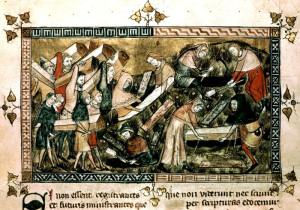
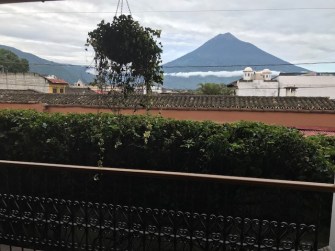
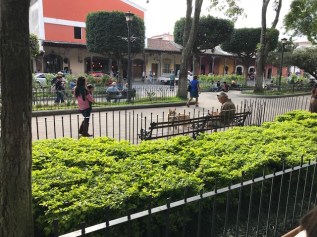
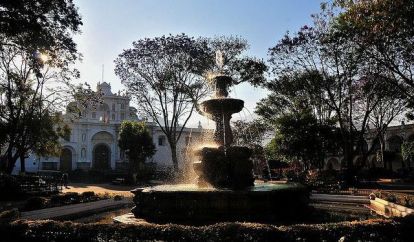

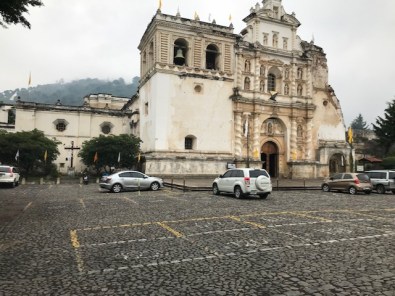

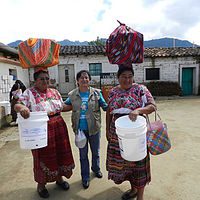
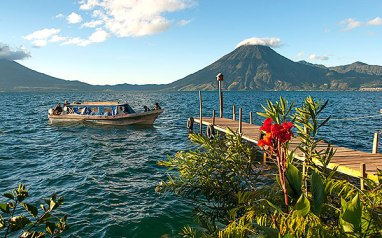
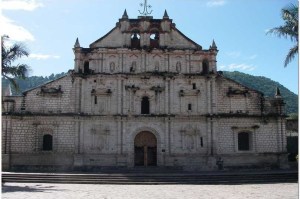
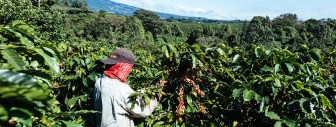
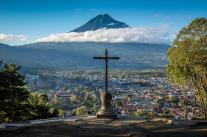
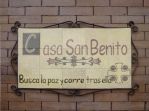
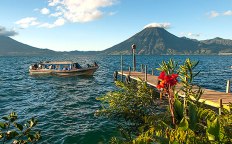
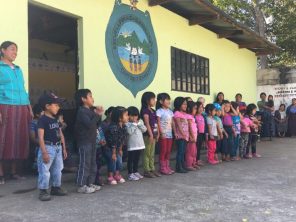
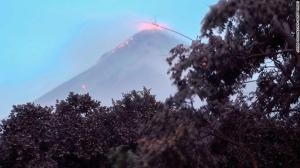
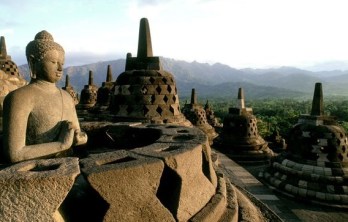
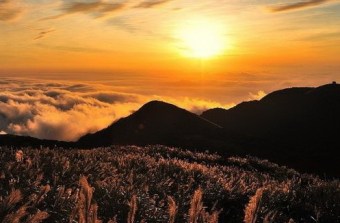
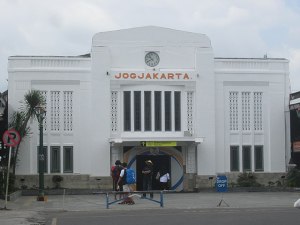
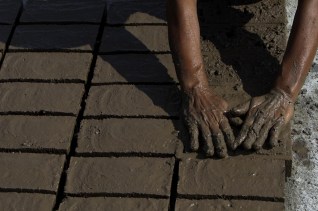
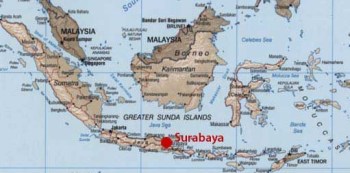

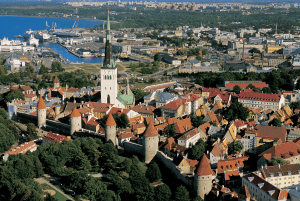

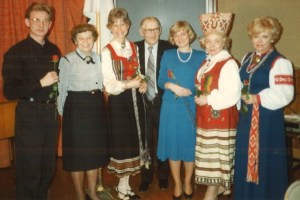
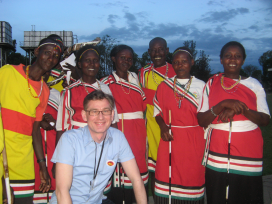
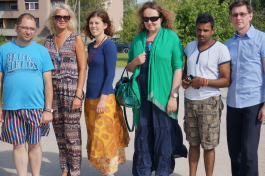
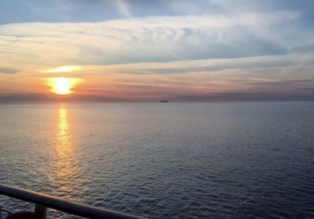
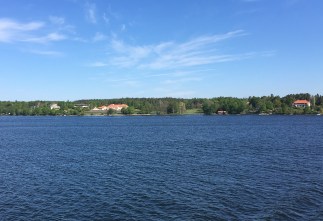
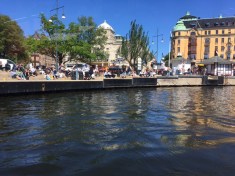
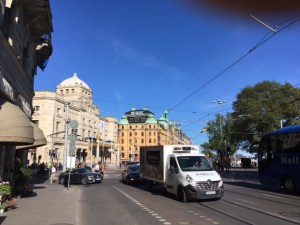 Monday, May 29, my last full day in Stockholm, began with a leisurely breakfast at Maude’s Hotel. Riding the now-familiar train into central Stockholm, I decided to first review the city landscape from tour bus and boat. The tour boat circles many of the fourteen islands that comprise the city, including Gamla Stan, the old royal palace center that I had toured on my first visit a couple weeks before. After exploring the smaller islands of Skeppsholmen and Kastellholmen, formerly dominated by a naval defense base but now turned over to museums, I chose to focus on the dramatic-looking Nordic Museum (Nordiska Museet). This is the Gothic-style building that fascinated me before, next to the Vasa Museum that I had spurned, much to the dismay of my hip-challenged AirBnb host.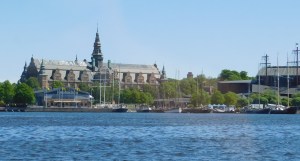
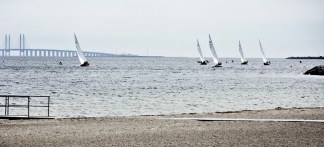
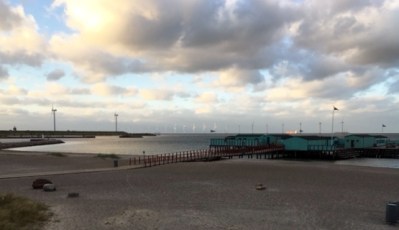
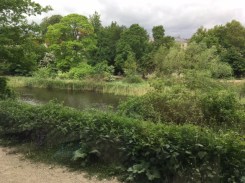 On my last full day of this ScanEst trip, I chose to focus on the great SMK, Statens Museum for Kunst or National Gallery of Art, on the edge of the Botanic and Kings Gardens. Following a crowded ride on the metro from the Oresund Station to the Norreport Station, I hiked again through the vast grounds. I had walked these grounds over two weeks before, found the SMK closed, and vowed to return when it was open. On a gray and misty Wednesday, 31 May, I strolled again past the Rosenborg Castle that dominates the Kings Garden (and pictured in an earlier post), and sat on a bench to watch the many birds in the marshes and ponds of the Botanic Gardens, before approaching the high wide stone steps of the SMK.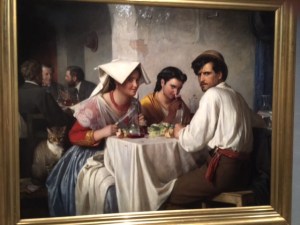

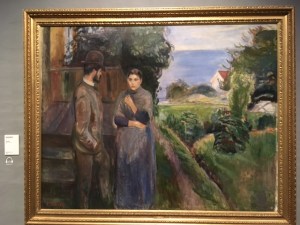
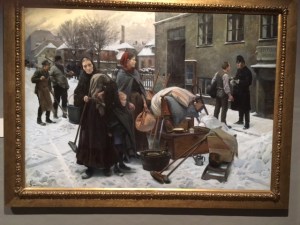
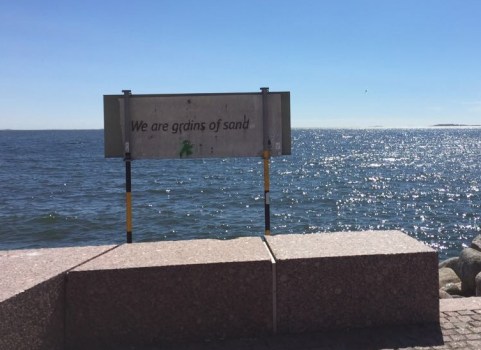
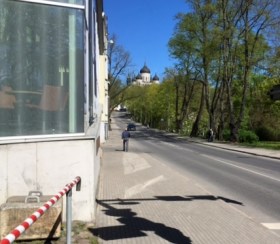
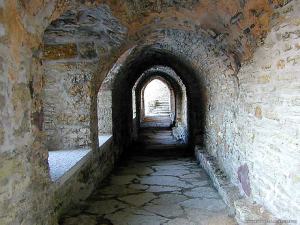
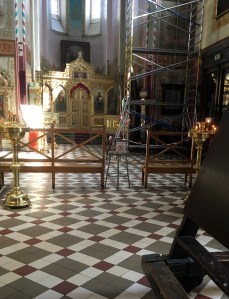
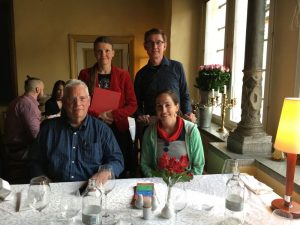
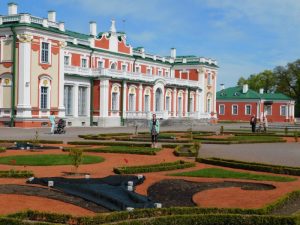
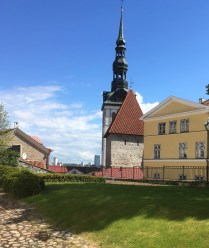
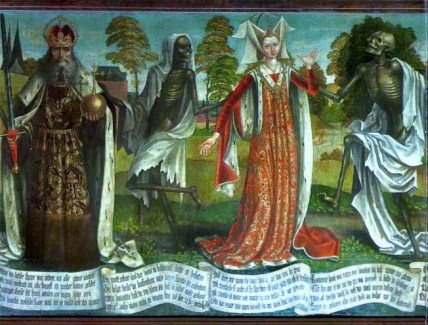

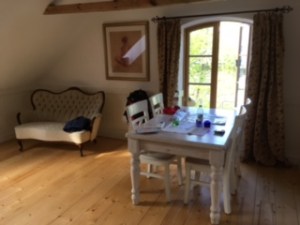
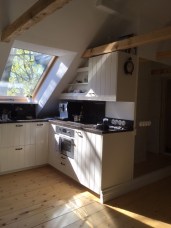
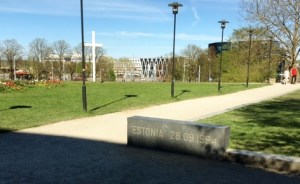
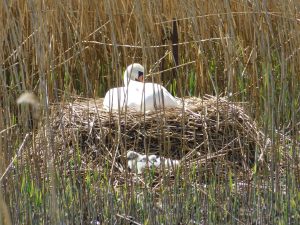
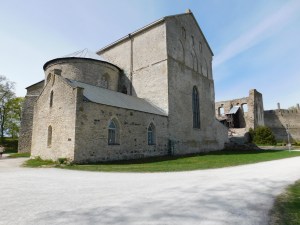
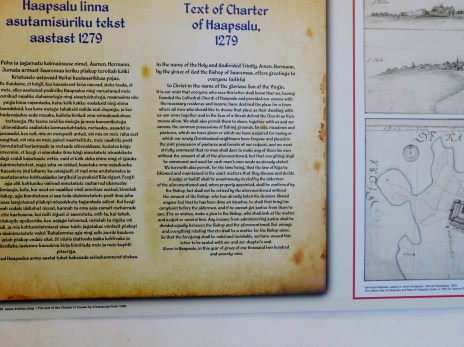
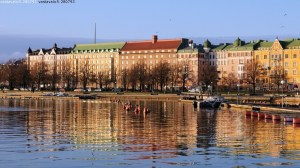
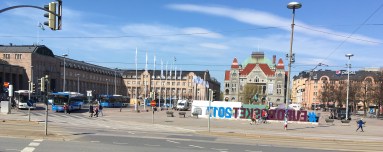
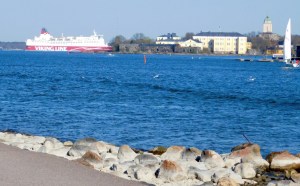
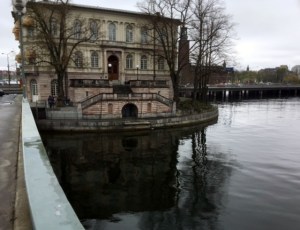

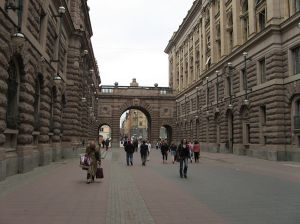
 Following the Spirit